Summary of Information on Workplace Hazards for Factory Employees

Summary of Information on Workplace Hazards for Factory Employees
Reference: Regulations under the Work Supervision Organization Law (Provision of Information and Employee Training), 1999
Main Hazards
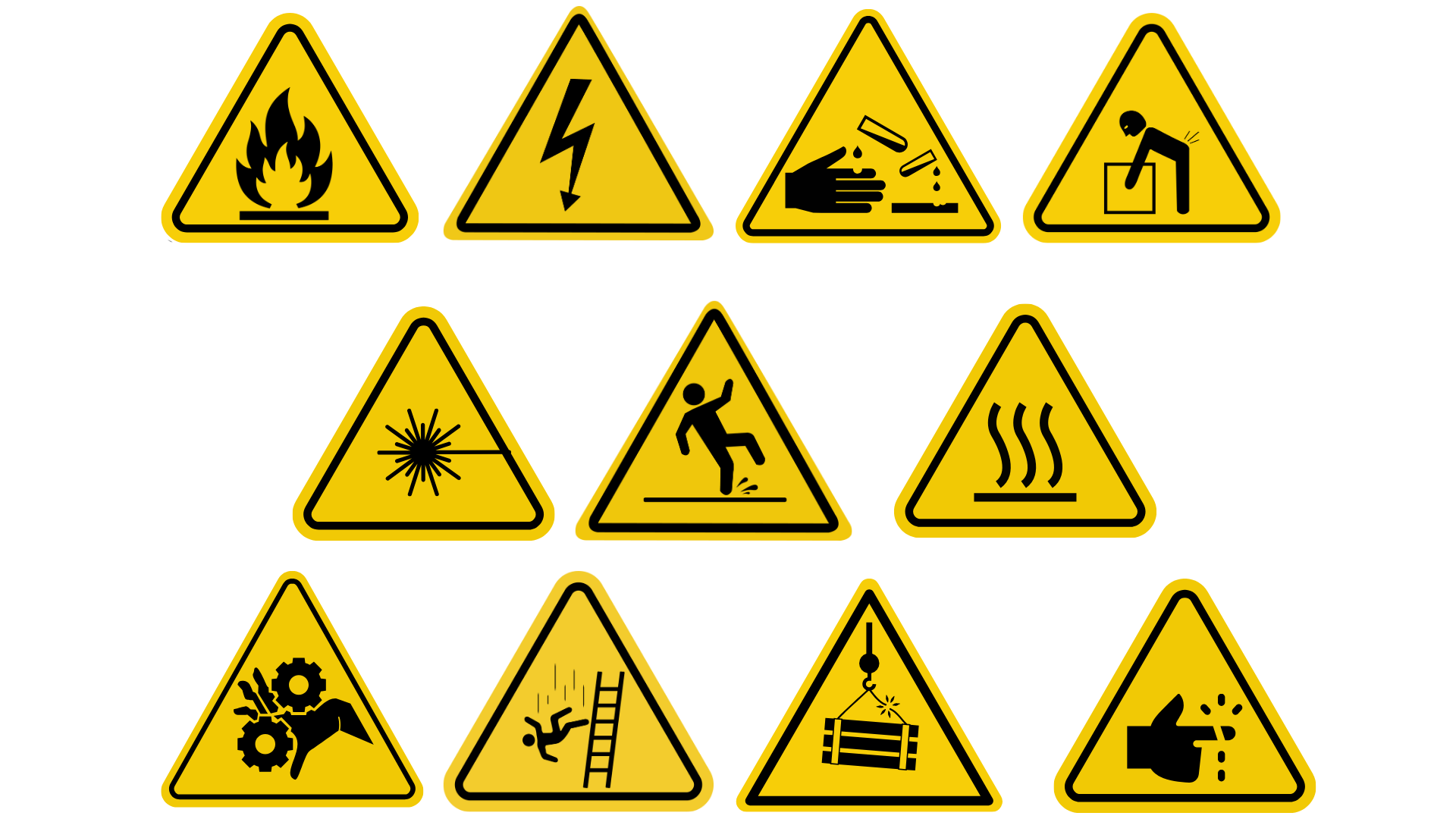
Employees may come into contact with electrical equipment, live wires or cables, or faulty electrical devices, and be exposed to the risk of electric shock.
Prolonged sitting, repetitive movements, and lifting or handling equipment, parts, or heavy loads may cause injuries to the back, hands, shoulders, and knees.
Exposure to hazardous substances such as solvents, adhesives, cleaning agents, soldering materials, and other chemicals may cause chemical burns, skin and eye irritation, and damage to the respiratory system.
Employees working in laser testing environments or performing laser-related work may be exposed to direct or reflected radiation, posing a risk of severe eye damage and skin burns.
Work in storage areas and around elevated equipment involves risks of falling from ladders or platforms, injuries from falling objects, and lifting heavy loads.
Work with lifting equipment (forklifts, cranes, lifting devices) may cause severe injuries due to overturning, impact with employees, falling loads, or entrapment between moving parts.
Work at sandblasting stations exposes employees to risks from high-velocity flying particles, respirable dust, eye and skin injuries, respiratory hazards, and noise exposure.
Employees moving around the facility, using stairs, or carrying equipment and parts may be exposed to tripping, slipping, and falling hazards due to objects left in walkways, wet or oily floors, laid cables, manual handling of equipment, or descending stairs with limited visibility and without the ability to hold a handrail.
Accident Risks – Examples
Trips, slips, and falls in walkways, stairways, and operational areas, especially when carrying equipment, working under time pressure, or when objects are present in walkways.
Electric shock resulting from contact with live wires or faulty electrical equipment.
Mechanical injuries caused by moving or rotating parts of machinery and equipment.
Falls from ladders or platforms during work.
Chemical burns resulting from spilling, mixing, or improper use of hazardous substances.
Cuts and puncture injuries from sharp tools, sharp edges, or metal parts.
Eye injuries from flying particles during grinding, polishing, sharpening, or sandblasting.
Injuries resulting from overexertion during lifting, pushing, pulling, or carrying loads.
Injuries caused by raised or moving loads during the operation of lifting equipment or presence in an active lifting area.
Physical Hazards
Exposure to localized electric fields during dismantling, connection, and soldering work.
Inadequate lighting, which may cause fatigue, headaches, and eye irritation.
Exposure to high and continuous noise during work with sandblasting systems and lifting machinery.
Chemical Hazards
Skin inflammations and allergic reactions due to exposure to organic solvents and their vapors.
Acute or chronic respiratory damage due to exposure to soldering fumes, dust, and volatile chemical substances.
Mandatory Preventive Measures
Wearing closed work shoes with slip-resistant soles. In production areas and when working with chemical substances, S3 safety shoes are required.
Electrical work shall be performed by a qualified electrician only. Power sources must be disconnected before opening, servicing, or maintaining electrical equipment.
Maintaining a clean and orderly work environment, free of cables or objects in walkways.
Prohibition on the use of defective equipment or tools.
Use of safety glasses for all grinding, polishing, and sharpening work.
Use of carts, lifts, and mechanical handling aids for lifting heavy loads, and performing proper lifting techniques (straight back, bent knees).
Working only on approved and intact ladders and platforms, with ascent and descent facing the ladder.
When working with hazardous substances – use of protective gloves, safety glasses, and additional personal protective equipment in accordance with the Safety Data Sheet (SDS).
During soldering work – use of appropriate respirators and splash-resistant safety glasses.
Work with laser systems shall be carried out only after training and in accordance with laser safety procedures.
Operation of lifting equipment shall be performed only by authorized and certified employees holding the appropriate appointment letter.
It is strictly prohibited to stand under a suspended load or within the movement area of lifting equipment unless operationally required.
During sandblasting work, the use of designated protective equipment is mandatory: respirators, gloves, and protective clothing.
Sandblasting work shall be performed only at designated stations and in accordance with approved work procedures.
Heavy equipment shall be stored on low shelves to prevent falls and lifting above shoulder height.
Familiarity with the location of emergency equipment: fire extinguishers, first aid kits, main electrical switches, and assembly points.
When in doubt, stop and ask.
Good luck.
